Granule Automatic Hoist is an automated device for vertically conveying granular, powdery and small lump materials. It mainly lifts materials from low to high positions through buckets or screw structures, achieving unmanned transfer.
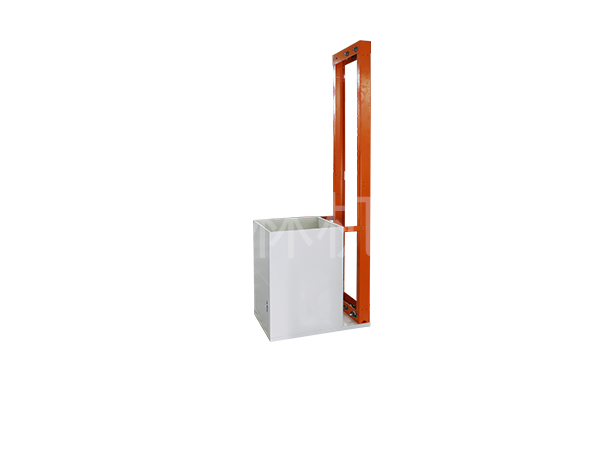
Material enters the base from the bottom inlet, and the circulating buckets scoop it up and lift it; when it reaches the head position, **discharging is completed by centrifugal force or gravity**, and the material is discharged from the outlet; empty buckets return to the bottom along the casing to continue the cycle.
Centrifugal discharge: high speed, suitable for small granules with good flowability;
Gravity discharge: low speed, suitable for fragile and large lump materials.
Z-type hoist: horizontal inlet – vertical lift – horizontal outlet; the inlet and outlet are not on the same vertical line, adapting to misaligned equipment layouts in the workshop with good space adaptability.
Next, let's look at the key points to avoid pitfalls when using a granule automatic hoist.
I. Pitfalls During Model Selection
1. **Material Breakage Issue**: for food and plastic pellets, prefer plastic buckets + belt type; metal chains and steel buckets will cause impact, resulting in granule breakage and more powder.
2. Do not look only at "output per hour"; confirm **material specific gravity, granule size, temperature, and whether it is sticky**; damp and caked granules tend to stick to the buckets, causing incomplete discharge and serious material return.
3. The higher the lifting height, the greater the chain tension; low-spec chains must not be selected for high-load conditions, otherwise they will stretch and break.
4. Check the layout of inlet and outlet positions: for ordinary bucket elevators, the inlet and outlet are vertically aligned; for misaligned equipment, a Z-type must be selected, otherwise the piping cannot be connected on site after installation.
5. Explosion-proof conditions: in dusty environments, use explosion-proof motors and anti-static belts, and configure explosion venting openings.
II. Pitfalls During Installation and Commissioning
1. **The whole machine must be vertical and the frame verticality must be ensured**; tilting will cause belt / chain deviation, buckets rubbing the casing, loud noise and buckets falling off.
2. Bottom tension adjustment should be moderate — neither too loose (slipping) nor too tight (accelerated wear and higher power consumption); perform regular secondary tensioning after operation, as the chain will stretch.
3. Inlet height position: if the inlet is too low, material accumulates directly in the base and the buckets forcibly scoop material, causing bucket deformation and bolt breakage; the inlet should be higher than the center line of the bottom pulley.
4. **The backstop (anti-reverse device) must be intact**; when the machine stops and power is cut, it prevents the weight of the material from driving the equipment in reverse and causing material backflow that blocks the base.
5. The discharge port connecting pipe must not press hard against the equipment casing or be forced to bear stress, to avoid casing deformation that jams the buckets.
III. Pitfalls During Operation and Production (Source of High-Frequency Faults)
1. **Overload feeding is strictly prohibited**; feeding must be uniform. Feeding too fast directly causes blockage at the bottom, surging current, buckets falling off and chains breaking; it is recommended to equip the upstream side with variable-frequency feeding speed control.
2. Metal impurities and large hard objects entering the base will jam the buckets, directly tearing the belt / deforming the buckets; it is recommended to install iron removers and screens at the front end to filter out impurities.
3. Observe whether discharging is clean:
- High-speed centrifugal models: if the speed is too low, material is not thrown out cleanly and a large amount returns to the base;
- Gravity discharge: if the speed is too fast, material cannot slide down by its own weight;
The speed must match the material — faster does not mean higher output.
4. Casing sealing: in high-dust conditions, inspection doors and observation windows must be sealed; prevent dust leakage, and note that dust accumulation poses an explosion hazard.
5. The blockage alarm must be enabled — do not shield the alarm; continuing to run with a blocked base will directly damage the buckets and traction components.
IV. Key Points for Daily Maintenance
1. Every shift inspection: abnormal noise, loose bucket bolts, bucket wear and deformation; if loose bolts are not tightened in time, bucket falling accidents will occur.
2. Regularly lubricate chains and bearings; ensure good bearing sealing in dusty environments; dust entering bearings causes rapid heating and seizure.
3. Regularly open the bottom cleaning port to discharge accumulated material; after shutdown, do not let material accumulate in the base, as damp material will cake and stick to the buckets.
4. For belt-type models, check whether the belt is deviating; for chain-type models, check chain elongation and cut/replace the chain if it is excessively stretched.







 Chinese Version
 English version