Vertical Hoist is specialized equipment in industry for vertical upward transfer of materials. It falls into two main categories: one conveying powders, granules and small bulk materials (bucket elevators), and the other conveying whole goods such as cartons, bins and pallets (warehouse pallet hoists). It is widely used in factory assembly lines, warehousing and logistics, grain, building materials, chemicals and food industries.
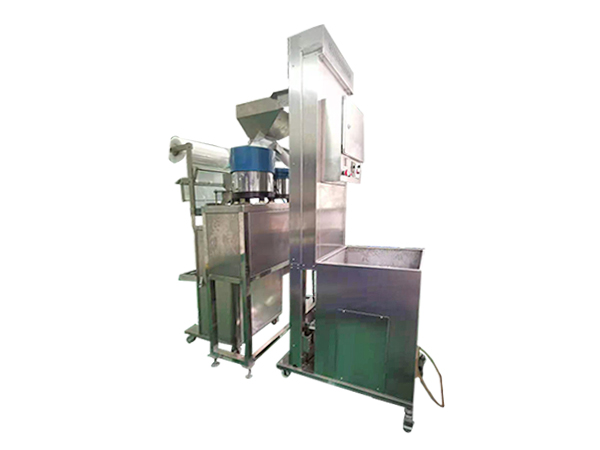
So, do you know the key points for the use and maintenance of vertical hoists?
I. Pre-Start Inspection (Required Every Shift)
Check the whole machine for abnormal noise and deformation; ensure the casing and guard doors are intact; ensure the safety protection devices (emergency stop, safety door, light curtain, backstop, blockage switch) are intact and effective — protection must not be bypassed at will.
Check the tension of the chain / belt; tension on both sides should be even, with no looseness or deviation; bucket bolts should not be loose or missing (bucket elevators).
Check all bearings and the reducer for oil leakage; oil level should be normal.
Confirm there are no foreign objects blocking the inlet and outlet; no material accumulation at the bottom of the base.
Run idle for 1–3 minutes to confirm there is no abnormal noise, vibration or jamming before starting to feed / load goods.
Operating sequence: start the machine idle first, then feed material; when stopping, stop feeding first and shut down after the material is fully discharged.
II. Key Points During Operation
Overload operation is strictly prohibited; material size and weight must not exceed the rated parameters of the equipment.
Feeding must be uniform and stable; sudden heavy feeding is prohibited to prevent blockage and stalling; damp and caked materials must not be fed directly.
Opening the inspection door or guard door during operation is prohibited; hands and tools must be kept away from the moving areas of chains, buckets and platforms.
If abnormal noise, vibration, blockage or overload alarm occurs, stop the machine and cut off power immediately for troubleshooting; running forcibly with a fault is prohibited.
For bucket elevators, pay attention to material return; if the return amount is too large, adjust the speed in time and check the buckets.
For pallet hoists: place goods centered, not exceeding width, height or weight limits, to prevent jamming against the frame.
Keep the backstop intact and do not remove it, to prevent reverse rotation and material falling back when the machine stops.
III. Daily Maintenance After Shutdown (Daily)
After stopping the feed, wait until all material inside is discharged before shutting down.
Clean accumulated material and dust at the bottom of the base to prevent accumulation from jamming the chain / buckets.
Clean residual material at the inlet and outlet.
Sweep the equipment surface, check bolts for looseness, and record abnormal conditions such as noise and alarms during operation.
IV. Regular Maintenance
Weekly Maintenance
Tighten bucket bolts, chain fasteners and casing connecting bolts; check buckets for cracks and wear.
Check chain and belt wear and elongation, and adjust tension in time.
Check whether the limit switches, blockage and deviation sensors, and backstop function properly.
Check the seals and address dust or material leakage by replacing sealing gaskets in time.
Monthly Maintenance
Grease the bearings; lubricate sprockets and chains (note: in dusty environments, do not apply excessive oil to avoid dust adhesion and caking).
Check the reducer oil level and for oil leakage; tighten the motor terminal connections.
For pallet models: check guide rail and chain wear, and calibrate the upper/lower limits and photoelectric / light curtain positions.
Check casing welds for cracks.
Quarterly / Semi-Annual
Replace the reducer lubricating oil (per the manual).
Perform an overall inspection of the chain; replace it if excessively stretched or if pins are severely worn.
Fully verify all safety protection devices.
Check bucket wear and replace damaged buckets in time to prevent buckets from falling off.







 Chinese Version
 English version