Automatic Loader is a device used for automated material conveying, widely used on production lines in the chemical, food, pharmaceutical and building materials industries.
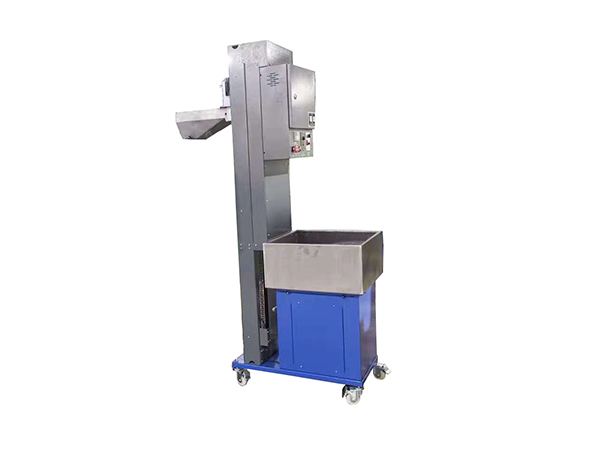
So, do you know what daily maintenance and care an automatic loader needs?
I. Daily Pre-Shift Maintenance
Cleaning and Inspection
Clean dust, waste and oil from the material bin, conveying guide rails, rollers, suction cups and the material stop/separation mechanism; for coil models, clean impurities from the air shaft surface to prevent scratching the material.
Appearance and Fastener Inspection
Check the frame and bracket screws for looseness; check air pipes and wires for wear, pinching or detachment.
Air Circuit / Power Inspection
Pneumatic models: check whether the air compressor pressure meets standards and whether the air pipes leak;
Servo models: power on and check the drive for alarms and the touch screen for fault records.
Sensor Confirmation
Wipe the lenses of photoelectric and proximity switches to confirm sensitive detection with no obstruction or displacement; avoid false triggering or failure to alarm on material shortage.
Idle Test Run
Run 2–3 idle cycles to check for abnormal noise, jamming or deviation; confirm smooth feeding and return motions.
II. Weekly Maintenance
Lubricate Transmission Parts
Apply the appropriate grease to chains, linear guide rails and sliding bearings;
For aerogel coil equipment, do not splash grease onto the roller surface to avoid contaminating the substrate.
Inspect Rollers and Air Shafts
Check the rubber roller surface for damage, hardening or glue adhesion; check whether the air shaft inflates and deflates smoothly and whether the air bladder leaks.
Inspect the Deviation Correction and Tension Mechanisms (key for coil models)
Test the deviation correction response speed; check whether the tension sensor and adjustment cylinder operate smoothly.
Vacuum System (suction cup loaders)
Clean the vacuum filter element; check the suction cups for cracks and air leaks; check the piping for negative pressure loss.
Clean the Electrical Control Box Cooling Vents
Blow out fan dust to prevent the drive from overheating and tripping.
III. Monthly In-Depth Maintenance
Fully Tighten Bolts
Tighten all material bin supports, servo motor bases, couplings and limit brackets; vibration-prone equipment tends to loosen screws.
Calibrate Transmission Clearances
Adjust chain tension; check the timing belt for tightness and cracks; for screw-type models, check whether clearance has increased.
Inspect Electrical Wiring
Check terminals for high-temperature oxidation and looseness; check cable sheathing for aging; ensure reliable grounding connections.
Verify Actuator Performance
Recalibrate tension parameters and sensor zero points; adjust the separation stop clearance to prevent material stacking and jamming.
Full Machine Cleaning
Clean accumulated chips and glue from dead corners; touch up paint where damaged to prevent rust, as appropriate.
IV. Quarterly Maintenance (Every 3 Months)
Reducer and Gearbox
Check the lubricating oil level; replace the oil if it is cloudy or has water ingress;
Servo Motor and Bearing Inspection
Listen to operating noise and replace bearings early if abnormal to prevent seizure during operation;
Verify Safety Devices
Test the emergency stop button, safety light curtain and overload protection; never allow operation with failed safety devices;
Re-Measure Machine Levelness
Long-term vibration causes frame displacement; adjust the machine feet to level it and avoid continuous material deviation.
V. Long-Term Shutdown (Over 7 Days) Maintenance
Empty the material from the bin to avoid deformation from long-term compression; for coils, remove them from the air shaft and release the expansion pressure;
Clean the rollers and suction cups, protect the roller surface, and avoid hard objects pressing into the rubber surface;
Apply a thin coat of anti-rust grease to all moving friction surfaces;
Cut off the main power supply and protect the electrical control box from dust and moisture;
In humid workshops, it is recommended to power on periodically to drive out moisture and prevent electrical short circuits.
VI. Key Operating Prohibitions (Important Maintenance Notes)
Never reach into the material bin or conveying area to clear material while the machine is running; cleaning must be done with the machine stopped and power cut off;
Add lubricating grease as needed and do not overfill or spill it, to avoid contaminating aerogel, plastic and coil materials;
Do not wash the electrical control box, servo motors or sensors directly with water, as this easily causes short circuits and burnout;
When material jams, do not forcibly keep restarting the equipment; check for foreign objects first to avoid motor overload burnout and structural deformation;
Keep rubber rollers and silicone parts away from long-term contact with machine oil and solvents to prevent swelling and aging.







 Chinese Version
 English version