Reciprocating Automatic Hoist is an automated device that drives a load platform up and down in a reciprocating motion via a motor, achieving vertical conveying of materials between different floors. It is commonly used in factory assembly lines, automated warehouses and similar scenarios.
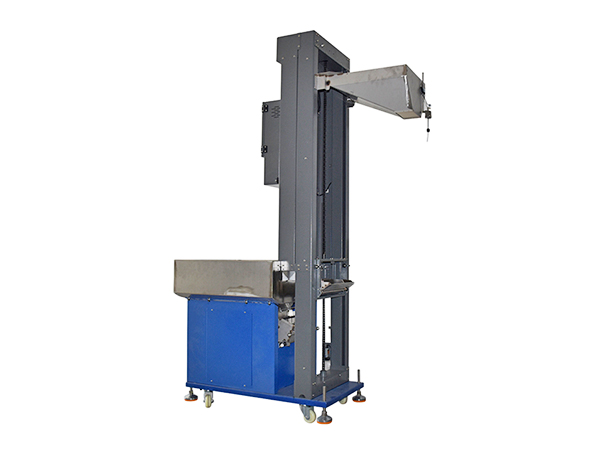
A motor + reducer drives a chain / wire rope that pulls the load platform, which moves up and down in a straight reciprocating line along steel structure guide rails; the load platform integrates roller or chain-plate conveyors on top, so materials enter the platform automatically from the horizontal assembly line of the floor, and after being lifted to the target floor, the platform rollers automatically discharge the materials. The whole process is PLC-controlled and can be connected to MES.
Safety Protection Devices1. **Upper and Lower Limit + Ultimate Switch**: the limit decelerates and stops the machine; the ultimate switch cuts off power to prevent over-travel at the top and bottom
2. **Chain-Break Protection Device**: when the chain breaks, mechanical locking prevents the load platform from falling
3. **Electromagnetic Brake**: brakes and locks instantly upon power loss or fault
4. **Safety Light Curtain / Door Interlock**: when the guard door is open, the equipment is prohibited from running; if a person enters the area, it stops immediately
5. **Overload Protection**: overweight alarm and startup prohibition
6. Emergency stop button, buffer device
Key distinction: reciprocating hoists (VRC) **must not carry people** and are not special equipment; construction hoists are special equipment that can specifically carry people + goods, with completely different certification and annual inspection requirements.







 Chinese Version
 English version