Reciprocating Automatic Hoist is an industrial automation device mainly used for vertical or horizontal reciprocating handling of materials in production lines or warehousing environments.
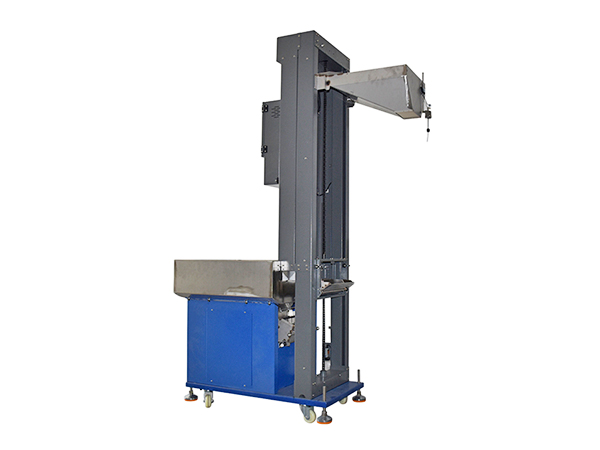
Today we will mainly talk about the main structural parts of a reciprocating automatic hoist.
Frame Structure: two-column / four-column steel structure shaft, providing support and an installation base.
Load Platform (Cabin): flat plate type, roller type, chain type; the platform has a built-in conveying mechanism to dock with external production lines for automatic loading and unloading of goods.
Drive and Transmission System
Chain drive: commonly used for medium loads, fast response;
Wire rope drive: suitable for long travel and medium-to-heavy loads;
Hydraulic drive: suitable for heavy loads in the tonnage range;
Includes motor, reducer, brake, sprocket / drum, chain / wire rope.
Guiding Mechanism: vertical guide rails, guide shoes, guide wheels, ensuring smooth platform operation and preventing deviation and swaying.
Control System: PLC + inverter + encoder + various sensors; enables floor calling, automatic leveling, automatic loading and unloading, and fault alarms; repeat positioning accuracy can reach ±2–5 mm.
Safety Devices (Key)
Chain-break / rope-break protection, anti-fall safety gear;
Overload limiter;
Upper and lower limit + ultimate limit switches, bottom buffer;
Electrical interlock on floor doors (the equipment cannot run if the door is not properly closed);
Mechanical leveling lock (mechanically locked after stopping to prevent the platform from sinking);
Safety light curtain, multiple emergency stop buttons, audible and visual alarms.







 Chinese Version
 English version